Medication Tracker Bundle: Evaluating Its Place in Your Daily Wellness Routine
The frustration of not remembering whether you took your morning pill is universal. That brief moment of panic—staring at the bottle, weighing the risk of skipping versus doubling up—can undermine confidence in self-care. For many, a structured, tangible system is the most direct answer. The Medication Tracker Bundle is a downloadable set of printable and fillable PDFs designed to replace uncertainty with a clear, written record. Rather than a digital app or a smart device, it offers a deliberately low-tech, paper-based framework you can keep right next to your pill bottles. This evaluation explores how the bundle works, who stands to benefit most, and where it fits alongside alternatives, helping you decide if it aligns with your health management needs.
What Exactly Is the Medication Tracker Bundle?
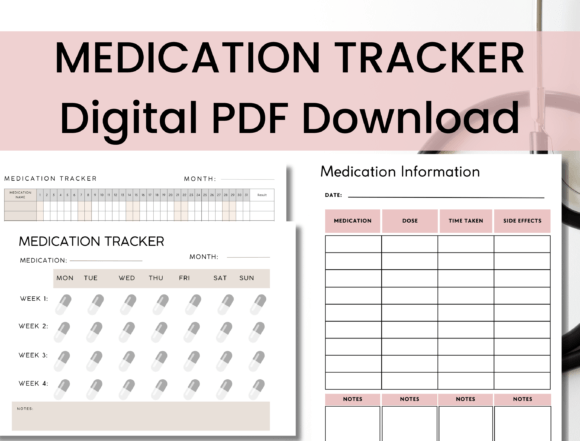
At its core, this product is a trio of PDF templates—a monthly tracker, a weekly tracker, and a medication information log. All three come in A4 format, available in both portrait (21cm x 29.7cm) and landscape (29.7cm x 21cm) orientations. The files are delivered in a single zipped folder for straightforward downloading. Designed to be used with any PDF annotation app (such as Acrobat or similar), you can fill them in digitally or print them out for handwriting. The bundle does not include pre-filled data or automated reminders; it is a blank canvas for you to customize according to your prescription list and schedule.
The monthly tracker gives a broad, at-a-glance overview of your medication intake across several weeks. The weekly tracker zooms in, providing a row-per-day or column-per-dose structure to check off each instance. The medication information log goes deeper, prompting you to record the drug name, dosage, time taken, and any side effects you experience. This log becomes particularly valuable when you need to share accurate, detailed information with a healthcare provider.
The promise is simple: keep a page alongside your bottles, mark it immediately after swallowing your tablet, and never again rely on memory alone. Because it is a PDF, you can reprint or redownload it as often as needed, making it a reusable tool rather than a one-time purchase.
Why This Approach Appeals to So Many People
Digital pill reminders and smartphone apps have become common, yet they don’t suit everyone. Notifications can be easy to ignore, battery anxiety is real, and older adults may find app navigation confusing. A physical checklist, on the other hand, creates an environmental cue—a piece of paper sitting right where you pour your water. The act of physically ticking a box can reinforce the habit more tangibly than tapping a screen.
The Medication Tracker Bundle also answers a subtle but significant need: tracking side effects. Many people take multiple prescriptions, supplements, or over-the-counter remedies, and when a new symptom appears, pinpointing the cause can be difficult. The information log encourages daily jotting of any observation, building a timeline that can reveal patterns. This is a feature often missing from basic reminder apps.
Another appeal is privacy. Paper stored in a home binder or folder contains no data that third-party apps might collect. For those cautious about health data on phones, this can be a reassuring factor.
Key Benefits and Practical Uses
Going beyond the basic checklist function, the bundle offers several concrete advantages:
- Doctor’s appointment companion. Bring the completed medication information log to consultations. Instead of trying to recall when you started a new drug or whether you missed doses last month, you can hand over a clear record. This helps physicians make better-informed decisions about dosage adjustments or possible drug interactions.
- Caregiver coordination. If a family member helps manage your medications, the weekly tracker becomes a shared communication tool. A spouse or visiting nurse can see at a glance whether the midday dose has been taken, avoiding dangerous double-dosing.
- Builds a consistent routine. Over time, the visual progression of checked boxes can be motivating. It provides a small sense of accomplishment and reinforces adherence, which is crucial for managing chronic conditions such as hypertension, diabetes, or thyroid imbalances.
- Flexibility in format. The inclusion of both portrait and landscape A4 pages allows you to choose the layout that fits your desk, countertop, or personal preference. If you prefer a clipboard, landscape might suit; for a notebook, portrait can be easier to file.
- No learning curve. Because it is essentially a form, anyone comfortable with a pen or the basic text tools in a PDF reader can start using it immediately.
In practice, many users print several copies of the weekly tracker and staple them into a small booklet, creating a durable log that spans a whole quarter. The digital fillable option, meanwhile, appeals to those who want to keep records on a tablet without accumulating paper clutter. The zipped download makes it simple to store the original files permanently on a device, reprinting whenever supplies run low.
Tradeoffs and Considerations to Keep in Mind
No single tool works for everyone, and the Medication Tracker Bundle does have limitations worth acknowledging before you commit to it.
- It won’t remind you active. Unlike an alarm-based app, the tracker cannot buzz or ping. If your challenge is that you simply don’t remember to even look at a chart, this bundle alone may not break that cycle. You would likely need to pair it with a phone alarm or a visual trigger, like placing the page on top of your coffee maker.
- Requires manual consistency. The effectiveness depends entirely on you or a caregiver filling it in every single time. On busy days, it’s easy to postpone the checkmark “just for a moment” and then forget. Systems that automatically log pill cap openings, for example, eliminate that friction.
- PDF annotation app needed for fillable use. While the PDFs can be printed without any special software, filling them digitally does require a compatible app. Most devices come with basic PDF viewers that handle this, but some users may find the interface less fluid than a dedicated tracker app.
- A4 sizing may need adjustment. A4 is standard in many parts of the world, but in North America, letter size (8.5” x 11”) is more common. When printing at home, you can usually scale to fit without issues, but it’s a slight extra step. The zipped format is universally download-friendly, but those unfamiliar with unzipping files might need a small amount of initial guidance.
- Not an interactive health record. The information remains static on a page. It won’t sync with your pharmacy or alert you to recall issues. If you require integration with broader health ecosystems, this bundle simply doesn’t offer that.
These tradeoffs are not flaws so much as design consequences of a paper-first, user-controlled approach. They matter more or less depending on your personal preferences and daily habits.
Situations Where the Medication Tracker Bundle Is a Strong Fit
Considering these characteristics, the bundle becomes an excellent choice in several specific scenarios:
- You prefer a tangible, analog solution. If you already rely on a wall calendar, sticky notes, or a bullet journal for other parts of your life, extending that same method to medication makes intuitive sense. The bundle slots neatly into a paper-based organizational system.
- Managing a complex or changing regimen. When you have multiple pills at varying times, with tapering doses or periodic antibiotics, a flexible fillable log helps track those nuances far better than a simple checkbox app. The information log, in particular, can document temporary medications that need close side-effect monitoring.
- You need a tool to share with healthcare providers. If you see a specialist who asks detailed questions about adherence and side effects, the completed logs serve as credible evidence. This is especially valuable when evaluating new treatments or adjusting long-term maintenance doses.
- Assisting an aging parent or loved one. For caregivers, a physical tracker placed conspicuously can be more reliable than a smartphone app that a senior might accidentally close. It provides a non-intrusive way to verify medication compliance without constant verbal reminders.
- You value privacy and simplicity above all else. Without accounts, passwords, or Bluetooth connections, the bundle puts you in full control. It’s a straightforward tool that does exactly what it says and nothing more.
When Alternatives Might Be Worth Exploring
If your situation doesn’t match the picture above, other options could better serve your needs. Understanding these alternatives helps make a balanced decision:
- You need automatic, time-based alerts. Pill reminder apps like Medisafe, CareZone, or built-in health apps on smartphones provide pop-up notifications, refill reminders, and even adherence reports. If you respond well to digital nudges, these are more proactive than a static page.
- Dexterity or vision challenges make paper difficult. Smart pill dispensers with audible alarms and flashing lights, or simple alarm-only watches, reduce the need for fine motor skills like ticking tiny boxes. For some, talking bottle caps can also provide a helpful cue.
- You have a strong preference for data integration. Individuals who use health platforms that gather data from multiple sources (such as fitness trackers, glucose monitors, and pharmacy apps) will find the PDF tracker an isolated island. Automated systems that compile records might be more aligned with your digital health ecosystem.
- You are frequently on the go and rarely near a printer. While the fillable version works on a tablet or phone, the format is best suited for a larger screen. If you need to log doses while commuting, a mobile-optimized app with a simple interface may be less cumbersome.
- You want a solution that learns and adapts. Some intelligent dispensers can detect patterns and notify a caregiver if a dose is missed. This proactive safety net is beyond the scope of a static tracker and is worth considering for individuals with cognitive decline or serious safety risks.
Making a Decision That Aligns With Your Goals
Ultimately, choosing the Medication Tracker Bundle comes down to a self-assessment of your habits, preferences, and the specific challenge you face. If forgetting whether you’ve taken a pill is the core problem, ask yourself: Am I more likely to trust a piece of paper I can see and touch, or a notification on a screen? For people who leave their phone charging in another room while they go through their morning routine, paper wins consistently. For those tethered to their device throughout the day, an app may be more natural.
Also, consider how you want to present information to your doctor. A handful of inked pages carries a different weight than a screen you hand over. It signals a deliberate, personal effort—something many patients and physicians find valuable. The bundle’s inclusion of a dedicated information log explicitly supports that clinical dialogue.
From a practical standpoint, begin by trying the weekly tracker for a full seven days. Print just that one page and place it in a spot that intersects with an existing habit, such as next to your toothbrush or coffee machine. If at the end of the week the boxes are faithfully checked and you feel less mental load around your medications, the bundle likely aligns well. If the page stays blank or you still rely on memory, it may be time to explore an automated prompt instead—or to combine the tracker with a simple alarm as a hybrid approach.
Cost is not a consideration here since this is a digital download, not a subscription. The commitment is one of time and habit formation. That low barrier makes it easy to test without significant risk. However, it’s worth remembering that the bundle’s value scales with your honesty in tracking. Skipping a check because “I’ll remember” defeats the very purpose.
In an age of complex health tech, a well-designed piece of paper can still be the most straightforward path to peace of mind. Whether you manage a single daily pill or a dozen, the visual confirmation of a checkmark can relieve the daily mental chatter that surrounds medication. The Medication Tracker Bundle offers exactly that—nothing more, nothing less—and for many, that focused simplicity is exactly what they need to stay on track confidently.