The Garage Sale Log Book: Your Blueprint for a Profitable, Organized Sale
Picture this: Saturday morning, 6 a.m. Tables are laden with old toys, kitchenware, and that never-used bread maker. Neighbors are already pulling into the driveway. A coffee can serves as your cash register, and a handful of sticky notes with random prices flutter in the early breeze. Within an hour, you’ve lost track of who sold what, whether Aunt Edna’s vase went for five dollars or ten, and you’re fairly certain a set of golf clubs walked away without payment. The chaos of an unplanned sale can turn what should be a profitable weekend into a blur of forgotten transactions and muddled earnings. This is exactly where the Garage Sale Log Book steps in—not as another gadget, but as a deliberately straightforward, paper-based companion designed to bring clarity, accuracy, and a surprising sense of calm to any type of sale event.
If you’ve ever tried to manage a multi-family yard sale, a charity auction, or a carefully curated estate liquidation, you already know that mental notes are unreliable. The beauty of a well-structured log book is that it externalizes memory, turning frantic moments into a series of simple, recorded decisions. The Garage Sale Log Book isn’t about complex formulas or digital dashboards; it’s about the tangible act of writing something down and knowing you can trust that record later. This fundamental reliability makes it a tool worth exploring, whether you’re a seasoned estate sale professional or someone hosting their very first driveway clearance.
What Makes This Organizer Different from a Blank Notebook?
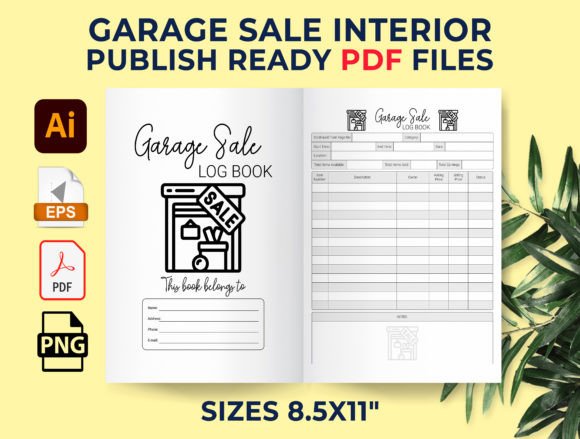
At first glance, you might wonder why you can’t just grab a spiral-bound pad from the dollar store. The answer lies in intentional design. This log book offers 120 pages of pre-structured space that anticipates your needs before you even realize them. Each page isn’t simply lined—it’s broken into logical fields that mirror the real-world flow of a sale. There’s a dedicated section for event details at the beginning: date, location, and time. That might seem minor, but when you’re looking back months later to compare which neighborhood yard sale performed better, those captured event details become invaluable data points. After all, a wet Sunday in April behaves very differently than a sunny Saturday in June.
Moving into the body of the log, you’ll discover columns for numbering each item, noting its original owner (invaluable for shared sales), the asking price, the final selling price, and detailed notes where you can jot down item condition, a buyer’s name, or even a quick haggle history. Finally, there’s a running space to total the amount earned. This structured approach eliminates the guesswork and the after-the-fact “I think I sold the lamp for…” conversations. Instead, you have a clean, chronological record that serves as both a sales journal and a receipts substitute.
Who Truly Benefits from a Detailed Log?
The short answer is almost anyone hosting a sale, but certain groups will find it transformative. Multi-family yard sales are a classic example: with the Garage Sale Log Book, you can assign a different owner to each row, ensuring that at the end of the day, Cousin Mike gets exactly his share from the power tools, and Grandma sees every dollar from her vintage china. This eliminates awkward money disputes and makes the settlement process take minutes, not hours.
For professional estate liquidators, the log book becomes a portable audit trail. Condition notes are particularly critical here—recording that a mid-century dresser had a scratch on the left drawer or that a set of books was water-damaged on the spine helps manage buyer expectations and post-sale inquiries. Auction organizers, whether for charity galas or storage unit cleanouts, appreciate the ability to note winning bidder names directly beside the item. The note field is flexible enough to capture a phone number or a short bidder ID, turning the log book into a compact bid sheet.
Small business owners who regularly clear out inventory through pop-up sales or local markets also benefit. By tracking asking versus selling prices over time, they gather informal pricing intelligence—no fancy software required. And let’s not forget the busy parent coordinating a school fundraiser rummage sale; having one central log that volunteers can easily understand removes a layer of stress from what is often a chaotic volunteer-driven event.
A Walk Through the Page Layout: Fields that Think Ahead
Let’s open up a typical page in the Garage Sale Log Book. The top of the page often contains that master event header: write the date, location, and time once, and you’ve automatically contextualized every entry that follows. This is especially handy if you’re using the book across multiple weekends. Below, the item grid usually offers the following columns, though you can add or delete pages as needed since the PDF format allows full customization before printing:
- Item #: A sequential number that makes it easy to cross-reference a physical tag on the item.
- Item Description: Enough space to jot “blue ceramic vase” or “DeWalt cordless drill set.”
- Owner: Crucial for shared sales; simply place initials or a code.
- Asking Price: The starting number, essential for tracking how much you were willing to accept initially.
- Selling Price: What it actually went for. This column tells powerful stories about your pricing strategy.
- Notes: A generous area for condition remarks, buyer names, or notes like “sold in bundle with #42.”
- Total Earned: A bottom-line figure that can be tallied per page or per section.
This layout isn’t random—it evolves from real garage sale experiences where clarity and speed are both necessary. You can fill it out quickly while a buyer is pulling cash from their wallet, but it still captures all the information you’ll need later.
From Pricing to Profit: Why Accuracy Matters
Pricing items for a yard sale is often more art than science, but without tracking actual selling prices, you never know whether you’re leaving money on the table or pricing too high and scaring off buyers. The Garage Sale Log Book lets you bridge that gap. When you document that a set of vintage Pyrex bowls flew off the table at full asking price within the first hour, you’ve learned that similar items might warrant a higher starting point next time. Conversely, if you see a pattern of items selling only after a 50% markdown late in the day, you might schedule strategic price drops for the final hour next time and note that in your log.
This kind of real-time feedback is rarely available to casual sale hosts, but it becomes an automatic byproduct of simply filling in the book. Even if you don’t consider yourself a data-driven person, flipping back through the pages after the sale gives you a clear picture of what moved, what didn’t, and at what price threshold buyers tend to bite. Over multiple sales, your log book becomes a personalized pricing guide.
Generous Dimensions and Print Quality: A Tool Built to Last
One of the most practical aspects of this log book is its physical specification. The design is formatted at 8.5 x 11 inches—standard letter size. This isn’t a cramped pocket notebook; it’s a full-size page that sits flat on a clipboard or table, leaving you ample room to write clearly. In the heat of a sale, when you’re juggling a dozen tasks, being able to jot down a number without squinting or contorting your hand is a small luxury that prevents mistakes.
The print-ready PDF file is created at a crisp 300 DPI high resolution. For anyone who has ever downloaded a printable and been disappointed by blurry, pixelated lines, this matters. The text and lines come out sharp, whether you print it at home on a laser printer or send it to a professional copy shop. The file is also set with no bleed, meaning you won’t lose any content near the margins, and you can confidently print it using standard settings without worrying about trimming. It’s been KDP tested with no errors, so if you decide to upload it to Kindle Direct Publishing and order a bound paperback for repeated use, you’ll receive a clean, commercially printed book that looks like something from a bookstore shelf.
Digital Flexibility: Formats for Every Use Case
While the core value is in the print, the digital delivery recognizes that different users have different workflows. The Garage Sale Log Book comes as a PDF, but also includes source files in AI, EPS, and PNG formats. This may sound technical, but it simply means that you aren’t locked into a static template. If you run a professional estate sale company, you could tweak the AI (Adobe Illustrator) file to add your company logo, change the column headers to match your specific lingo, or even translate the text into another language before printing. The EPS file maintains vector quality for scaling, and the PNG files give you quick image previews. This degree of customization is rare in printable stationery products, and it bridges the gap between a simple log book and a flexible business tool.
The “you can add or delete as much as you want” feature is particularly useful. Maybe you want a longer event notes section or a page dedicated solely to high-value items with extra detail. Because you have editable source files, you can tailor the book before a single sheet of paper is used. For the average user, the PDF is perfectly sufficient, but having the option to evolve the tool as your needs grow is a forward-thinking touch.
The Value of Handwritten Over Digital: When Simplicity Wins
It’s tempting to argue that a spreadsheet or a mobile app could do all this. And technically, they can. But yards and estate sales are messy, physical environments. Sun glare makes phones hard to read, Wi-Fi is often non-existent in a driveway, and the last thing you want is to hand your expensive smartphone to a volunteer who has jelly donut fingers. The paper log book sidesteps these issues entirely. It requires no batteries, no updates, and no learning curve. When a buyer asks for a receipt on the spot, you can tear out a page (or keep a carbon copy if you’ve rigged one) or simply snap a photo with your phone later. The handwritten note also carries a nostalgic, personal feel that some buyers appreciate at estate sales—it feels more trustworthy than a sterile digital record.
That said, it’s worth noting a limitation: a paper log is not searchable unless you digitize it afterward. If you plan to run dozens of sales a year and want to aggregate decades of data, you would eventually need to transcribe key numbers into a spreadsheet. However, for the immediate goals of tracking a single event and producing a clear, indisputable record for multiple sellers, the Garage Sale Log Book excels without any technological overhead. Many users find that taking a photo of each completed page with their phone serves as a searchable backup if needed—a simple bridge between analog and digital worlds.
Real-World Scenarios: Bringing the Log Book to Life
Consider a neighborhood-wide yard sale where five families pool their items. Before the sale, each family takes a few pages and lists their items, pre-filling the owner column and asking price. On the day, one person acts as cashier while another roams the tables. When a bulky item like a patio set sells, the cashier logs it immediately, noting the selling price. At the end of the day, the totals per owner are calculated from the log book in minutes. Disputes are nonexistent because everyone can see the written record.
Now imagine an estate sale professional handling a home full of antiques. Buyers often have specific questions about provenance or condition. The liquidator uses the notes field to write “small chip on rim” next to an ornate dish set, or “working order, tested 3/12” beside a vintage amplifier. When the buyer returns the next day to pick up a larger piece, those notes serve as a condition report, protecting the seller from false damage claims and building trust.
In a charity silent auction, the log book transforms into a bid tracking mechanism. The “asking price” becomes the starting bid, and the “selling price” is updated as sheets are checked. The notes field holds bidder numbers. When the auction closes, the log is the definitive winner list, reducing the chaos of managing loose bid sheets.
Making the Most of 120 Pages: Tips for Efficient Use
120 pages is a generous allocation, suitable for several sales if used judiciously, or one massive estate sale if you list every small item. To avoid wasting space, consider batching low-value items: instead of listing each CD individually, log “Box of 30 CDs — $5.” Use the page-per-day format to organize multi-day events cleanly, starting a fresh page for each new day. If you find you consistently need more note room, print selected pages double-sided with a notes section expanded in your editable file.
Another approach is to designate certain pages for “high-value items only” early in the sale, keeping them separate from the general grab-bag items. This helps with security and accountability. The intro page is a perfect spot to write contact information in case the book is misplaced, or to jot down a quick cash float record at the start of the day so you can accurately reconcile your cash box later.
Is This the Right Fit for Your Next Sale?
Choosing a tracking tool comes down to your personal workflow and the complexity of your event. If you’re a solo seller with three dozen items and you’re comfortable using a note on your phone, you might not need a dedicated log book. However, as soon as you introduce multiple sellers, high-ticket items, or the need for post-sale transparency, the Garage Sale Log Book shifts from a nice-to-have to a must-have. Its low tech barrier, combined with the ability to customize before printing, makes it adaptable to wildly different scenarios. The large format and 300 DPI clarity ensure that when you’re tired and the sun is beating down, you can still read what you wrote.
Before committing, ask yourself: Do I need to track money per person? Do I worry about forgetting price adjustments? Will buyers ask for written confirmation? If you answered yes to any of these, the structure this log book provides will save you far more in peace of mind and recovered earnings than the time it takes to fill it out.
Turning Sales Chaos into a System You Can Trust
For all the excitement of a good yard sale find or a successful auction lot, the administrative side of running a sale can feel like a burden. But it doesn’t have to. By choosing a tool that’s been designed specifically for this purpose—with event details, item numbers, owner tracking, dual price columns, and thoughtful note space—you’re not just staying organized; you’re building a reliable memory outside yourself. The Garage Sale Log Book is a simple, tangible solution that respects the fast, dusty reality of real sales while giving you a professional-grade recordkeeping system. Whether you print it at home, customize it for your brand, or order a perfect-bound copy through KDP, it stands ready to turn your next yard sale, auction, or estate sale into a clear, profitable, and surprisingly stress-free experience.