Mastering Seasonal Gardening with a 12-Month Garden Planner and Log Book
Every seasoned gardener knows that successful growing seasons don't start when the first seed hits the soil. They begin months earlier, often while snow still blankets the ground, with pencil and paper. A Garden Planner and Log Book 12 Months serves as the central nervous system for this preparatory work, tracking decisions, observations, and outcomes across an entire year. More than a simple notebook, it structures the gardener's thinking, converting scattered intentions into actionable seasonal workflows.
What makes a dedicated planning system effective is its ability to hold multiple layers of information simultaneously. Garden layout sketches sit alongside monthly task lists. Shopping records from early spring sit near summer harvest notes. Planting dates align with transplant schedules. This integration prevents the fragmentation that happens when critical details are stored in separate places—a phone here, a sticky note there, a memory that fades by June.
Why a Structured Layout Changes Everything
Amateur gardeners often underestimate the complexity of managing even a modest plot. Crop rotation needs, companion planting rules, soil amendment schedules, and succession planting timelines all compete for attention. Without a visual reference, it becomes easy to plant tomatoes in the same bed three years running or forget which variety of basil performed best last summer.
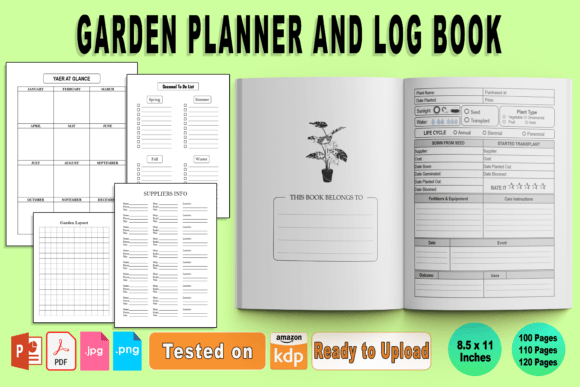
The Garden Layout component of a well-designed planner gives spatial clarity. Sketching beds, marking sun exposure zones, and noting irrigation paths transforms abstract plans into a concrete map. When you can see, at a glance, that the north bed receives only four hours of direct light in August, you stop trying to grow peppers there. This spatial awareness compounds over seasons. A layout from two years ago reveals patterns invisible in the moment—disease hotspots, microclimate pockets, soil drainage variations.
Many planners also incorporate a Year at a Glance spread. This bird's-eye calendar allows gardeners to plot major milestones: last frost dates, first harvest expectations, cover crop planting windows. Seeing all twelve months on one or two pages creates a temporal map that prevents scheduling collisions and reveals gaps where beds might sit idle.
The Seasonal Rhythm: Breaking Down Monthly Planning
Gardening follows a biological clock that pays no attention to human convenience. A Seasonal To-Do List bridges this gap by anticipating needs before they become urgent. In January, the list might include ordering seeds, testing germination rates on stored packets, and servicing tools. By March, attention shifts to indoor seed starting, bed preparation, and hardening off young plants.
Monthly Calendars as Accountability Anchors
Individual Monthly Calendars provide granular control. A January calendar page might note the date seed catalogs arrive, the weekend designated for inventory, and the evening set aside for mapping crop rotations. Come April, that same calendar holds transplant dates, direct-sow reminders, and pest monitoring checkpoints. The act of writing these commitments down increases follow-through. Research on goal achievement consistently shows that specific, written plans outperform vague intentions.
To-Do Lists Tailored to Each Month
Beyond the calendar grid, dedicated To-Do List for Each Month sections capture tasks that don't fit neatly into a single date. These might include broader projects like building a new raised bed, sourcing compost, or repairing drip lines. The list format suits tasks that span multiple days or require flexible scheduling around weather conditions.
Sow and Transplant Tracking
The Sow Transplant for Each Month pages represent the operational core of the planner. Here, gardeners record specific varieties, seeding dates, germination rates, and transplant readiness indicators. This data becomes invaluable when planning the following year. If 'Cherokee Purple' tomatoes took twelve days to germinate at 70°F last March, that information shapes expectations and scheduling for the current season. Without written records, these details blur together and fade.
Timing transplants correctly often makes the difference between vigorous plants and stunted ones. Moving seedlings too early exposes them to cold shock; moving them too late risks root-bound containers and transplant stress. The planner's structured format encourages gardeners to work backward from target transplant dates, calculating seed-starting timelines with precision.
Practical Purchasing: The Shopping List Function
Impulse buying plagues gardeners. Walk into a nursery in May and suddenly three varieties of eggplant, two unexpected tomato starts, and a mysterious perennial find their way into the cart—none of which fit the planned layout. A Shopping List for Each Month imposes discipline. January's list specifies seed orders. March's list details potting mix quantities and tray counts. May's list narrows nursery visits to specific items: replacement basil starts, a bag of worm castings, six feet of trellis netting.
This targeted approach reduces waste and saves money. It also prevents the overwhelm that comes from buying plants without designated spaces. When every purchase ties to a specific bed and purpose, the garden stays coherent.
Plant Care Sheets: Building a Living Reference
Individual Plant Care Sheets with Notes elevate the planner from a scheduling tool to a knowledge repository. For each crop, a dedicated sheet might capture sun requirements, water preferences, common pest vulnerabilities, fertilizer schedules, and harvest indicators. The notes section invites ongoing observation: "First fruit set June 14," "Aphid pressure heavy on the east side," "Flavor exceptional—grow again next year."
Over multiple seasons, these sheets accumulate wisdom that no gardening book can provide because it's specific to your soil, your microclimate, your management style. A plant care sheet for kale grown in heavy clay tells a different story than one for kale in sandy loam. The localized knowledge compounds in value with each passing year.
Who Benefits Most from This System
The versatility of a Garden Planner and Log Book 12 Months makes it relevant across experience levels and contexts. Understanding how different groups use the same tool reveals its adaptability.
Hobbyist Gardeners
For the backyard grower managing a few raised beds or a small plot, the planner provides structure without overcomplication. The monthly spreads prevent the common pattern of enthusiastic spring planting followed by neglected summer maintenance. Having a July to-do list that includes "check tomato hornworm activity" and "harvest garlic when lower leaves brown" keeps the gardener engaged through the full season. The log book aspect also builds a satisfying record of progress. Flipping back through months of entries creates a tangible sense of accomplishment.
Market Growers and Small Farmers
Commercial producers face higher stakes. Crop failure isn't just disappointing—it affects income. For these users, the planner becomes a business asset. Succession planting schedules must align with market demand. Harvest records inform pricing and planting volume decisions. The shopping list function tracks input costs. Plant care sheets document variety trials, helping growers identify which cultivars perform best in their conditions and command premium prices.
A market grower might use the Sow Transplant for Each Month section to stagger lettuce plantings every two weeks, ensuring continuous harvests rather than feast-and-famine cycles. Notes about germination rates inform seed ordering quantities, preventing shortages and costly last-minute purchases.
Community Garden Coordinators
Managing shared garden spaces introduces coordination challenges. Multiple gardeners working adjacent plots need synchronized schedules for tasks like turning off shared irrigation or scheduling communal work days. A planner adapted for coordinator use can track these shared responsibilities alongside individual plot management. The layout function helps visualize plot assignments and rotation requirements across the community space.
Educators and School Garden Programs
School gardens serve dual purposes: producing food and teaching students about biology, ecology, and nutrition. Teachers benefit from planning that aligns garden activities with the academic calendar. Planting schedules must account for summer breaks when school is out of session. Fall harvests need to occur before winter holidays. The planner's structure helps educators design growing cycles that maximize learning opportunities during the school year while planning low-maintenance summer crops or arranging volunteer watering schedules for July and August.
Researchers and Plant Breeders
Anyone conducting variety trials or breeding projects requires meticulous documentation. Isolation distances between varieties, pollination dates, selection criteria for seed saving—these details demand recording. The Plant Care Sheets with Notes format suits this purpose well, providing dedicated space for observations that generic notebooks lack. Researchers might track flowering dates across dozens of accessions, note disease resistance expressions, or document yield component data. The structured format makes data retrieval efficient when it's time to analyze results and make selections.
The Value of Physical Record-Keeping
Digital garden apps exist, and they offer genuine conveniences—search functionality, photo attachments, weather data integration. Yet physical planners retain distinct advantages. They never run out of battery. They're visible on the kitchen counter, serving as constant reminders of tasks that need attention. The act of handwriting engages memory differently than typing, often improving retention of the information recorded.
Physical planners also resist the temptation of feature creep. A notebook doesn't send notifications, display advertisements, or require updates. It simply holds what you put into it, organized in a way that makes sense to you. The constraints of paper—fixed space, no infinite scrolling—encourage concision and prioritization.
Many experienced gardeners use a hybrid approach: daily task reminders on a phone, but the deep planning and long-term records in a physical book. The planner becomes the permanent archive; the phone handles fleeting notifications.
Setting Up for Success Across the Year
The beginning of a new planner invites thoughtful setup. Rather than jumping straight to April planting schedules, effective gardeners spend time on foundation-setting entries. Mapping the existing garden layout—even if beds are currently empty—provides a baseline. Noting last year's crop locations prevents rotation mistakes. Recording frost dates for your specific location calibrates all subsequent scheduling.
The Supplier Info section deserves early attention. Listing preferred seed companies, local nurseries, compost suppliers, and irrigation parts vendors saves time throughout the year. When a trellis breaks mid-season or a pest outbreak requires immediate action, having contact information readily available prevents frantic searching.
As the year progresses, the planner accumulates character. Coffee stains on May's calendar page, soil-smudged fingerprints on the transplant log, hastily scribbled notes about an unexpected late frost—these marks tell the real story of a growing season. Years later, these volumes become personal archives more valuable than any published garden reference.
Adapting the System to Your Scale
The beauty of a well-designed planner lies in its scalability. A gardener with a single 4x8 raised bed uses the same monthly calendar structure as someone managing a half-acre market garden. The container gardener on a balcony fills plant care sheets for pots of herbs and determinate tomatoes; the homesteader tracks field crops and orchard management. The framework accommodates the user, not the other way around.
Some gardeners add supplementary sections to fit specific interests. A seed saver might expand the plant care notes to include isolation techniques and cleaning methods. A cut flower grower might add harvest stage indicators and vase life observations. The structured foundation supports these customizations without collapsing into chaos.
Regular review sessions strengthen the system's value. Setting aside thirty minutes at the end of each month to assess what worked, what didn't, and what needs adjusting transforms the planner from a passive log into an active management tool. These review sessions often reveal patterns: recurring pest pressure in a specific bed suggests soil health issues; consistently late tomato harvests suggest earlier seed starting next year. The insights compound, and the garden improves season after season.
Closing the Loop: From Record to Wisdom
The ultimate purpose of a Garden Planner and Log Book 12 Months isn't organization for its own sake. It's the conversion of raw experience into actionable knowledge. Every recorded germination date, every shopping list, every seasonal to-do item contributes to a growing body of personal agricultural intelligence. That intelligence, specific to a particular patch of ground and a particular gardener's hands, cannot be bought or downloaded. It can only be built, season by season, page by page, with consistent attention and honest documentation.